

2026 Visual Identity Update
Why is UCCS updating its visual identity?
As UCCS continues to advance its vision for the future, the university has been exploring how its visual identity can best reflect who we are and where we are going. This work is part of a broader effort informed by the 2030 Strategic Plan, the differentiator project and the Strategic Enrollment Plan, all of which are helping shape the institution's next era of growth and impact.
Through focus groups and a brand feedback survey that generated nearly 1,000 responses, students, faculty, staff, alumni and community members shared valuable perspectives on the UCCS visual identity. Feedback showed that association with the CU System provides important value, but it also highlighted the need to elevate the distinctive qualities that set the university apart.
The visual identity update seeks to balance both priorities, creating a stronger and more cohesive expression of the university's identity as it continues to evolve.
Page last updated on June 29, 2026
Resources


FAQs
No, the university will still be called the University of Colorado Colorado Springs, in alignment with the other CU campuses – University of Colorado Boulder, University of Colorado Denver, and University of Colorado Anschutz.
No, UCCS will continue to be used as the acronym for the University of Colorado Colorado Springs.
No, the university will not use an abbreviation of Colorado Springs (CS) alongside CU or any other abbreviations. UCCS will continue to be used as our acronym.
No, this is not a rebrand. The existing elements of the university branding will remain the same – there is just an additional mark being added.
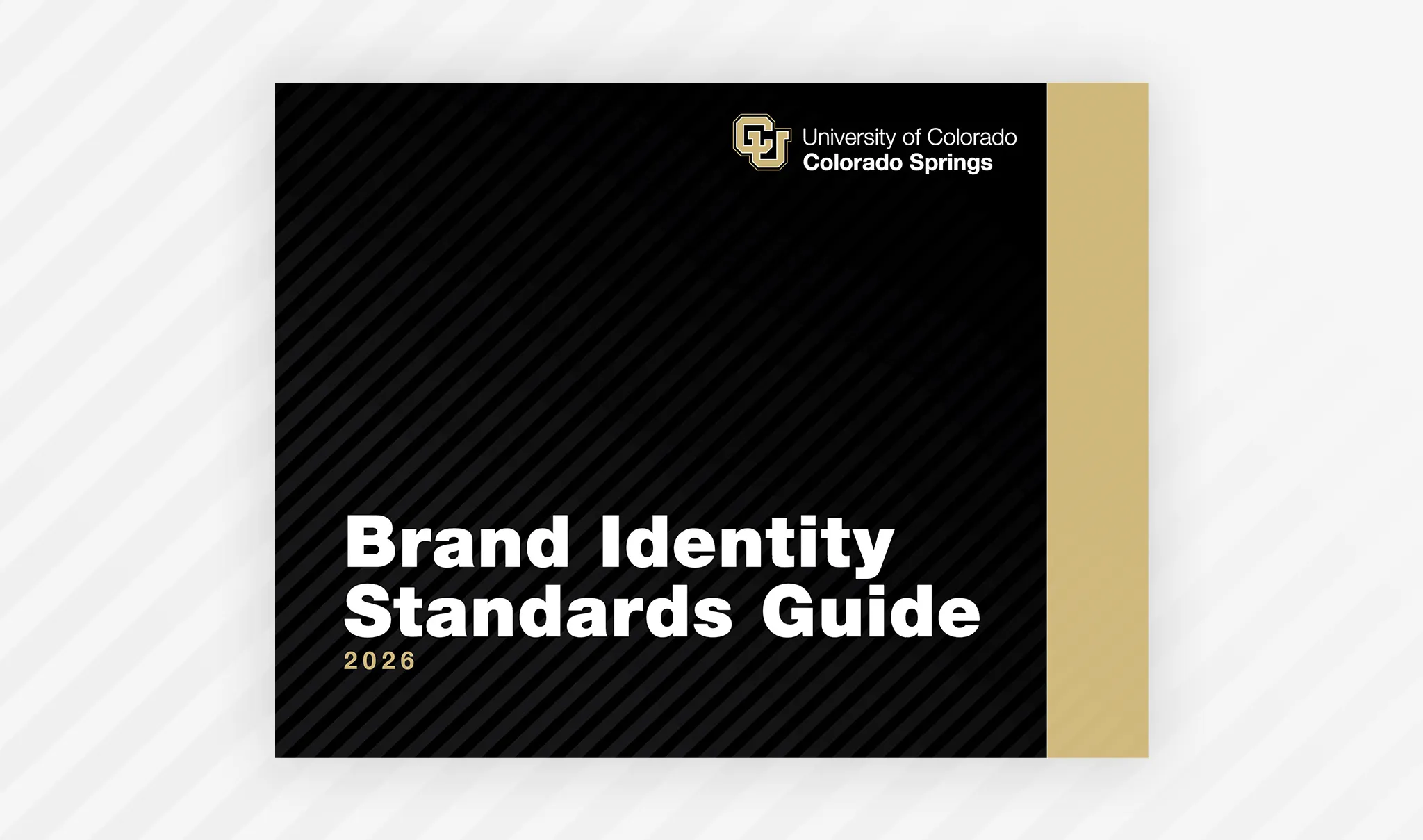
Beginning July 1, 2026, an additional university mark featuring the interlocking CU will be added to the visual identity standards. This mark aligns more closely with the University of Colorado System and may be used in situations where that alignment creates a position of strength for the university.
No, the new mark will be available for use, but it will not be required for areas outside of Official University Business.
Official University Business refers to activities, communications, programs, services, events, initiatives, and operations that are conducted on behalf of the university or represent the whole university to internal or external audiences. Examples include admissions and recruitment materials, academic and administrative communications, university websites, official events, fundraising and advancement activities, marketing campaigns, and other communications produced by university departments, colleges, and units.
There are currently no plans to remove, retire, or discontinue any existing university logos or marks. The current UCCS mark will remain part of the university's visual identity standards.
No. Feedback from the campus community made it clear that the timing is not right for an expensive or large-scale implementation effort. The university is not requiring immediate replacement of existing materials solely because of this update.
There will not be any new signature extensions with the new CU mark. Please contact us for recommendations related to use cases that previously used a signature extension.
As this is a new mark for the university, we are still working on what that looks like on many items. Visit brand.uccs.edu/cu-design-examples for examples.
No. When the new mark is used, the additional CU System co-branding mark that lists all CU campuses will no longer be required. If the UCCS mark is used, CU System co-branding is still required.
No decisions have been made regarding athletics or spirit marks. During the fall 2026 semester, the university will invite campus participation in the development and evaluation of additional marks, including a coordinating short mark and potential athletics and spirit marks.
University leadership considered feedback from multiple focus groups and nearly 1,000 survey responses. The feedback helped shape the approach by highlighting the value of CU System alignment, balanced with concerns about implementation costs, and the importance of focusing on the university's long-term strategic identity.
Additional opportunities for campus participation and feedback will be provided as the university explores future visual identity elements and related brand standards.